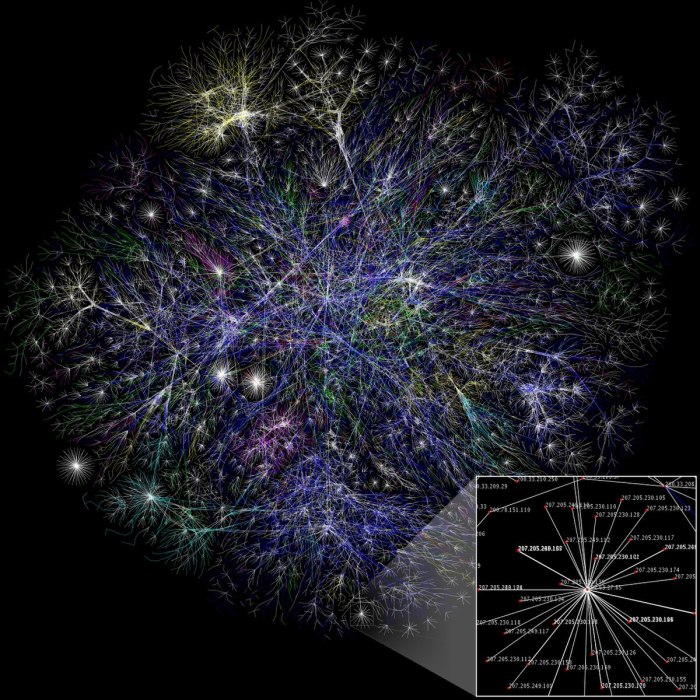
Topology in data analysis is an exciting field that merges mathematical concepts with practical data interpretation, offering unique insights into complex datasets. By exploring topological structures, analysts can reveal patterns and relationships that traditional statistical methods might overlook.
The significance of topology lies in its ability to categorize and understand data through its shape and form, rather than merely focusing on numerical values. This approach opens up new avenues for data representation, making it crucial for various disciplines including biology, sociology, and machine learning.
Introduction to Topology in Data Analysis
Topology, in essence, is a branch of mathematics that focuses on the properties of space that are preserved under continuous transformations. In the realm of data analysis, topology becomes particularly relevant as it provides a framework for understanding the shape and structure of data. Traditional data analysis methods often rely on numerical interpretations and statistical techniques, which can miss the underlying patterns in complex datasets.
By leveraging topological concepts, analysts can gain deeper insights into the relationships and features of the data.Topology introduces key concepts such as open sets, continuity, and compactness, which serve as the building blocks for more advanced techniques. Unlike traditional methods that typically analyze data using fixed metrics, topology allows for a more flexible approach that can adapt to the natural structure of the data.
This distinction is crucial, as it opens up new avenues for exploration and understanding in various fields.
Key Topological Concepts
Understanding the foundational terms in topology is essential for applying these concepts in data analysis. Here are three key terms that play a significant role:
- Open Sets: In topology, an open set is a fundamental concept that describes a collection of points where each point has a surrounding neighborhood that is entirely contained within the set. This property is crucial for defining continuity and convergence.
- Compactness: A set is compact if it is both closed and bounded. This property is significant because it often allows for the simplification of complex problems, making it easier to analyze data within limited boundaries.
- Continuity: A function is continuous if small changes in the input result in small changes in the output. This concept is vital for ensuring that the topological features of data remain consistent under various transformations.
The significance of homology and cohomology also cannot be overlooked. These concepts allow for the representation of data in terms of its topological features, providing a way to quantify the shape of data. For example, in a dataset that represents a network, homology can be used to identify connected components, loops, and voids, which are critical for understanding the data’s structure.
Applications of Topology in Data Analysis
Topology finds applications across various fields, enhancing the analysis of complex data structures. Some notable areas include:
- Biology: Topological methods have proven invaluable in analyzing biological data. For instance, researchers use these techniques to study the shape of proteins or to understand the connectivity of neural networks.
- Sociology: In social network analysis, topology aids in identifying clusters and communities within social structures, revealing underlying patterns of interactions among individuals.
- Machine Learning: Topological data analysis (TDA) can enhance feature extraction and improve model performance, particularly in high-dimensional datasets where traditional methods may struggle.
Case studies demonstrate the successful application of topological methods, such as the use of persistent homology to analyze the shape of data derived from cancer research, allowing for the identification of significant biomarker patterns. This insight can lead to improved diagnostics and treatment plans.
Topological Data Analysis (TDA)
Topological Data Analysis (TDA) is a methodology that utilizes topology to extract meaningful information from complex datasets. TDA relies on the understanding of topological structures rather than just numerical properties, allowing for a more comprehensive analysis of data.To implement TDA, several tools and software frameworks are commonly used, including:
- Giotto: An open-source library for TDA that provides an accessible framework for researchers and data scientists.
- Ripser: A fast and efficient tool for computing persistent homology, particularly useful for large datasets.
- Persimmon: A software that visualizes persistence diagrams, making it easier to interpret topological features of datasets.
The process of creating persistence diagrams is fundamental in TDA. These diagrams summarize the topological features across different scales, highlighting significant structures within the data. They serve as a powerful tool for interpreting complex relationships, enabling data analysts to visualize and understand the underlying patterns.
Challenges and Limitations of Topology in Data Analysis
Despite its advantages, applying topology in data analysis presents several challenges. Some common obstacles include:
- Complexity of Implementation: The mathematical foundations of topology can be daunting, making it difficult for practitioners without a strong mathematical background to apply these methods.
- Scalability Issues: Topological methods may struggle with large datasets, as computational requirements can grow significantly, making analysis slower and more resource-intensive.
- Interpreting Results: The results from topological analyses can sometimes be abstract or non-intuitive, requiring careful consideration and expertise to draw meaningful conclusions.
Addressing these challenges involves developing user-friendly software tools, optimizing algorithms for better performance, and offering educational resources to help analysts understand and interpret topological results effectively.
Exact and Formal Sciences in Relation to Topology
Topology is deeply intertwined with formal sciences such as mathematics and logic. Theoretical foundations of topology arise from rigorous mathematical principles, allowing for a precise understanding of its concepts.Formal sciences contribute to topology by providing the necessary logical frameworks to establish theories, proofs, and applications. Examples of formal scientific principles that enhance the understanding of topological concepts include:
- Set Theory: This foundational mathematical theory underpins many topological concepts, such as open and closed sets.
- Category Theory: This area of mathematics provides a high-level abstraction that helps in understanding the relationships between different topological spaces.
- Algorithms and Computational Theory: These fields offer insights into the computational aspects of topological data analysis, helping to bridge the gap between theory and practical applications.
Such foundational knowledge is crucial for advancing the field of topology and its applications in data analysis.
Future Trends in Topology and Data Analysis
Emerging trends in technology and interdisciplinary collaborations are poised to impact the use of topology in data analysis significantly. Some anticipated developments include:
- Advancements in Computational Power: As computing technology continues to evolve, it will become increasingly feasible to apply topological methods to larger and more complex datasets, expanding the scope of analysis.
- Interdisciplinary Collaborations: Fields such as biology, neuroscience, and social sciences are likely to collaborate more with topologists, leading to novel applications and insights that push the boundaries of traditional data analysis.
- Integration with Machine Learning: The combination of TDA with machine learning techniques is expected to yield powerful tools for feature extraction and data interpretation, enabling enhanced predictive modeling.
Predictions suggest that as the field of big data continues to grow, topological methods will evolve to address the challenges posed by data complexity, leading to new techniques and applications that will enrich our understanding of the world around us.
Conclusive Thoughts
In summary, the integration of topology into data analysis not only enriches our understanding of data structures but also paves the way for innovative applications across numerous fields. As we continue to explore and refine topological methods, we can anticipate even greater advancements that will further leverage the power of data in our decision-making processes.
FAQ Resource
What is topology in simple terms?
Topology is a branch of mathematics that studies the properties of space that are preserved under continuous transformations, focusing on concepts like continuity and connectedness.
How is topology applied in data analysis?
Topology is used in data analysis to identify patterns and relationships within data, helping to visualize and interpret complex structures that traditional methods may not reveal.
What are persistence diagrams?
Persistence diagrams are a way to summarize the topological features of a dataset, providing visual representations that highlight significant structures over different scales.
What are some challenges in using topology for data analysis?
Challenges include difficulty in interpreting results, handling large datasets, and the complexity of translating topological concepts into practical applications.
What fields benefit from topology in data analysis?
Fields such as biology, sociology, and machine learning benefit significantly from topology, as it helps in understanding the relationships and structures inherent in complex datasets.


