Probability theory in AI sets the stage for this enthralling narrative, offering readers a glimpse into a story that is rich in detail and brimming with originality from the outset. This mathematical framework is pivotal in understanding and managing uncertainty, enabling AI systems to make informed decisions based on incomplete information. From foundational concepts like random variables and distributions to advanced applications in machine learning, the interplay between probability and artificial intelligence shapes the future of technology.
The significance of probability theory is evident in its ability to facilitate rational decision-making processes, allowing AI systems to navigate complexities and optimize outcomes. As we delve into the historical development and key concepts, we will uncover the powerful role that probability plays in the advancement of AI.
Introduction to Probability Theory in AI
Probability theory forms the backbone of many artificial intelligence systems, influencing how machines interpret data and make decisions. Understanding the fundamental concepts of probability is crucial for anyone aiming to navigate the intricate landscape of AI. Probability theory helps AI systems weigh various outcomes, aiding in decision-making processes that rely on uncertain data. Its historical development has intertwined with advancements in AI, showcasing its significance in shaping intelligent systems.
Fundamental Concepts of Probability Theory
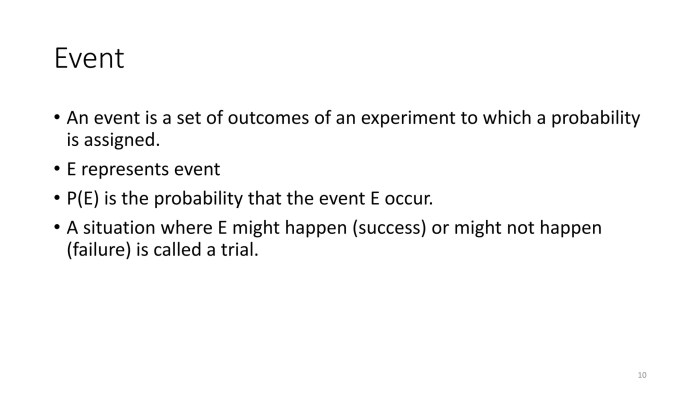
At its core, probability theory deals with quantifying uncertainty. Key concepts such as random variables, events, and probability distributions serve as foundational elements in AI applications. A random variable represents a numerical outcome of a random process, while events are defined as subsets of possible outcomes. Probability distributions describe how probabilities are assigned across these outcomes, serving as critical tools in modeling uncertainties.
The Significance of Probability Theory in Decision-Making
In AI systems, probability theory is pivotal for decision-making. It enables the evaluation of risks and the expected outcomes of actions under uncertainty. For instance, algorithms like decision trees and reinforcement learning utilize probabilistic reasoning to optimize strategies based on anticipated rewards.
Historical Development of Probability Theory in AI
The integration of probability theory into AI has evolved over decades. From early rule-based systems to modern machine learning algorithms, probability has provided a mathematical framework for reasoning under uncertainty. Key developments, such as Bayesian inference and Markov decision processes, have revolutionized how AI systems learn from data.
Key Concepts in Probability Theory
Understanding the terminology and concepts in probability theory is essential for grasping its applications in AI. This section delves into the definitions and differences between critical components.
Random Variables and Distributions
Random variables can be classified into two types: discrete and continuous. Discrete random variables take on countable values, such as the number of heads when flipping a coin, while continuous random variables can take any value within a range, like the height of individuals in a population.
Bayes’ Theorem
Bayes’ theorem is a fundamental concept in probability, used to update the probability estimates of a hypothesis as more evidence becomes available. It is articulated as:
P(A|B) = (P(B|A)
P(A)) / P(B)
This theorem is integral to various AI applications, including spam detection and medical diagnosis.
Applications of Probability Theory in AI
Probability theory finds extensive application in AI, particularly within machine learning algorithms. Here are some of the ways it is utilized:
Machine Learning Algorithms Utilizing Probability
Numerous machine learning algorithms leverage probability theory for function approximation and classification. Key examples include:
- Naive Bayes Classifier: Utilizes Bayes’ theorem for classification tasks based on prior probabilities.
- Hidden Markov Models (HMM): Employs probabilistic models to represent systems where the state is not directly observable.
- Gaussian Mixture Models (GMM): Uses a mixture of Gaussian distributions to model complex data distributions.
Comparative Overview of AI Models
The table below summarizes different AI models that utilize probability theory:
| Model | Description | Key Features |
|---|---|---|
| Bayesian Networks | Graphical models representing probabilistic relationships among variables. | Handles uncertainty, allows for reasoning about causality. |
| Markov Models | Models that predict future states based on the current state. | Memoryless property, suitable for sequential data. |
Uncertainty Quantification in AI
Probability theory plays a vital role in quantifying uncertainty in AI systems. By modeling uncertainty, AI can make informed predictions and decisions, leading to more robust and reliable outcomes. Techniques such as Monte Carlo simulations are often employed to assess risk and uncertainty in complex models.
Exact and Formal Sciences in Probability Theory
Probability theory is intricately linked with formal sciences, such as logic and mathematics. This section examines their relationship.
Relationship with Formal Sciences
Probability theory relies heavily on mathematical principles, providing a rigorous framework for formulating probabilistic models. The concepts of measure theory and set theory underpin the mathematical foundation necessary for developing robust AI systems.
The Importance of Rigorous Proofs
In the realm of AI, rigorous proofs and formal methodologies are essential for ensuring the reliability of probabilistic models. The use of formal verification techniques can prevent errors in AI systems, enhancing their reliability.
Examples of Formal Sciences in AI
Various probabilistic models in AI benefit from the contributions of formal sciences. For instance, logic-based probabilistic reasoning combines traditional logic with probability, allowing for more nuanced decision-making in uncertain environments.
Challenges and Limitations
Despite its significance, the application of probability theory in AI is not without challenges. This section Artikels some of the key issues.
Challenges in Application
Some major challenges in applying probability theory within AI include:
- Computational Complexity: Many probabilistic algorithms can become computationally intensive, particularly with large datasets.
- Data Limitations: The accuracy of probabilistic models heavily relies on the quality and quantity of data available.
Real-World Scenarios and Limitations
In real-world applications, probability theory may lead to incorrect conclusions due to flawed assumptions or inadequate data. For example, in predictive policing, biased historical data can skew predictions, leading to unjust outcomes.
Potential Solutions
To address these limitations, researchers are exploring various solutions. Some approaches include:
- Improving data collection methods to enhance the quality and diversity of training data.
- Developing more efficient algorithms that can handle larger datasets with reduced computational overhead.
Future Directions
Looking ahead, the integration of probability theory in AI is poised for exciting advancements. This section explores potential trends and research areas.
Emerging Trends in Probability Theory within AI
Several trends are emerging in the application of probability theory in AI, including:
- Integration of deep learning with probabilistic models to enhance uncertainty handling.
- Advancements in automated machine learning (AutoML) that incorporate probabilistic approaches for model selection.
Research Areas for Exploration
Potential research areas that could benefit from a deeper exploration of probability theory in AI include:
- Robustness in uncertain environments: Developing models that remain reliable in the face of uncertainty.
- Interpretable AI: Enhancing the interpretability of probabilistic models to foster trust in AI systems.
Projections for Probabilistic Models
The evolution of probabilistic models is expected to significantly impact future AI developments. As AI systems become increasingly complex, the need for sophisticated probabilistic frameworks will grow, paving the way for more intelligent, adaptive, and capable AI systems.
Wrap-Up
In conclusion, the journey through probability theory in AI reveals a landscape filled with challenges and opportunities. As we have discussed, the integration of probability not only enhances machine learning algorithms but also introduces nuanced approaches to handling uncertainty. The future promises exciting developments, and as researchers continue to explore this vital area, we can anticipate greater sophistication in AI’s decision-making capabilities for years to come.
General Inquiries
What is the importance of Bayes’ theorem in AI?
Bayes’ theorem is crucial in AI as it allows systems to update the probability of hypotheses as more evidence becomes available, facilitating better decision-making.
How does probability theory handle uncertainty in AI?
Probability theory provides a structured way to quantify uncertainty, enabling AI models to make predictions and decisions even when data is incomplete or ambiguous.
What are the main challenges in applying probability theory in AI?
Challenges include computational complexity, data quality issues, and the risk of drawing incorrect conclusions from probabilistic models.
How is probability theory used in machine learning?
Probability theory underpins many machine learning algorithms, allowing for the modeling of uncertainties and helping to optimize learning from data.
What future trends can we expect in probability theory and AI?
Future trends may include enhanced probabilistic models, better algorithms for uncertainty quantification, and increased integration of probability theory in various AI applications.


